US Baby Passport Photo
Every US citizen including newborns needs their own passport. The photo rules are mostly the same as an adult passport, with a narrow set of genuine relaxations for infants built into 8 FAM 402.1. This page covers exactly what is relaxed, what stays strict, and the two methods that work reliably at home.
- 2x2 inch — same as adult passport
- Eyes closed OK for newborns (8 FAM 402.1)
- White sheet & car seat methods covered
- Age-by-age guide: newborn to 5+
- DS-11 parental consent rules
- 100% acceptance guarantee
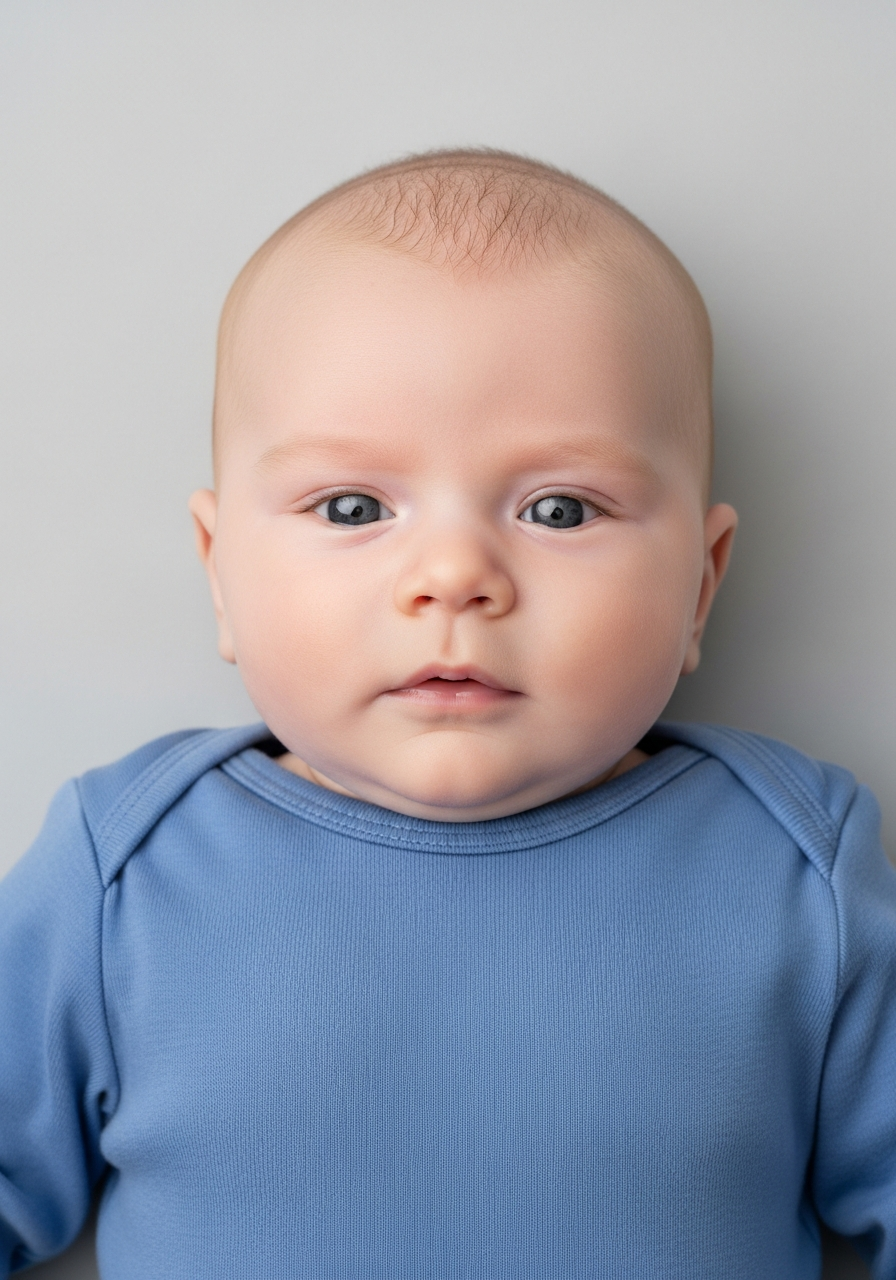
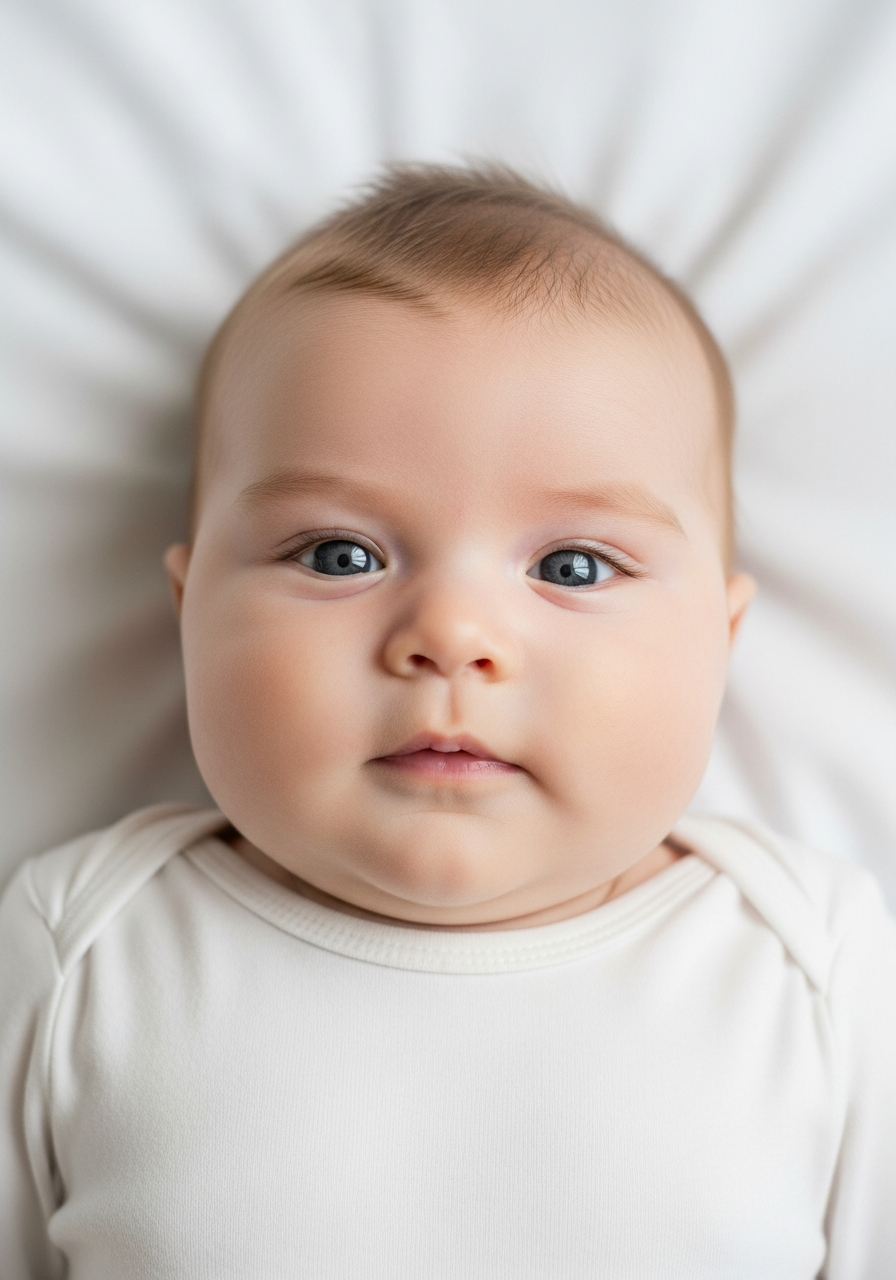
Drag to compare before vs after
Photo Specifications
Will my photo be accepted?
Size
2x2 in
Lighting
No shadows
Focus
Sharp & clear
Background
White or off-white
Head height
1–1⅜ in (25–35 mm)
Recency
Last 6 months
Online submission
Printable
How It Works
1. Upload Your Photo
Take a photo with your smartphone or webcam, or upload an existing image.
2. Image Processing
We remove the background, crop to exact specifications, and check against compliance.
3. Download & Print
Get your digital photo instantly, plus a print-ready PDF with cut guides.
Getting a passport photo of a baby sounds simple until you are standing over a squirming newborn with a phone, a white sheet, and exactly zero cooperation. Every US citizen, including newborns, needs their own passport for international travel. The photo rules are the same underlying framework as an adult passport, with a narrow but genuinely useful set of relaxations for infants that the State Department built specifically because they understand the problem. This page covers exactly what is relaxed, what stays strict, the two approved methods that work reliably at home, the age-by-age breakdown from newborn through 5+, the parental consent rules for DS-11, and the rejection causes that are specific to baby photos.
At a glance: US baby passport photo specifications
| Requirement | Specification | |---|---| | Size | 2 x 2 inches (51 x 51 mm). Square format. Same as adult passport photo. | | Head height | 1 to 1-3/8 inches (25–35mm) from chin to crown. 50–69% of frame height. | | Background | White or off-white. Plain, no shadows, patterns, or textures. | | Expression | Neutral. Crying, laughing, and wide smiles cause rejection. Natural variation accepted for infants. | | Eyes | Newborns: partially or completely closed is acceptable. Infants 6+ months: should be open. Toddlers and older: fully open required. | | Head support | Discreet support permitted for infants. Parent's face must not appear. Car seat with white blanket explicitly approved. | | Head tilt | Acceptable for infants. Not acceptable for children over 1 year. | | Other people | No other person visible in the frame. No parent face, no prominent hands, no siblings. | | Objects | No pacifiers, toys, or bottles. Car seat structure must be fully covered with a white blanket. | | Validity | Children under 16: 5 years. Adults 16+: 10 years. | | Recency | Within the last 6 months for passport. Within 30 days for USCIS applications. |
What the State Department relaxes for infants
Primary source: 8 FAM 402.1, the Foreign Affairs Manual that governs passport acceptance agents — the internal guidance document that determines what gets accepted or rejected at the counter.
From 8 FAM 402.1 directly: *"(1) It is acceptable if the infant's eyes, particularly a newborn's, are partially or completely closed; (2) The infant's head may be discreetly supported, e.g., a car seat with a white or off-white blanket behind the child. Head tilt is acceptable for infants; and (3) A parent's face cannot be in the photograph of the infant."*
Three specific relaxations, clearly defined:
Eyes partially or completely closed:
For newborns specifically, the State Department acknowledges that infants do not have reliable eye control. A newborn photographed with eyes partially open or even mostly closed will generally be accepted. For older babies from around 6 months, eyes should be open, and for toddlers 1 year and older the full adult standard applies. Do not wake a sleeping newborn to get an eyes-open shot — shoot in burst mode and take 20–30 frames.
Discreet head support permitted:
The phrase "discreetly supported" in 8 FAM 402.1 is specific. A hand that appears prominently in the frame, grips the head visibly, or partially covers the face causes rejection. A hand that supports the head from behind, is not the visual focus of the photo, and does not obstruct the face is generally accepted. The white sheet method and the car seat method eliminate the need for visible hand support entirely.
Head tilt acceptable for infants:
Adult passport photos require the head to be level and directly facing the camera. For infants, the State Department explicitly accepts a slight head tilt reflecting the baby's natural position. A baby lying on a white sheet will typically have a slightly angled head position that would be unacceptable for an adult — this is not a problem for infant photos.
What is NOT relaxed, even for newborns:
- No other person in the frame: The parent's face cannot appear. A parent's hand appearing prominently causes rejection. The baby must be the only subject.
- Background: White or off-white is still required. A patterned blanket, colored wall, or textured surface is not acceptable even for newborns.
- Full face visible: Even for sleeping newborns, the full face from chin to crown must be clearly visible. A face obscured by blankets, hands, or angle is rejected.
- No objects: No pacifiers, dummies, toys, or bottles. A baby photographed with a pacifier in their mouth is rejected regardless of age.
The two methods: white sheet and car seat
The State Department implicitly approves both methods in its guidance and example photos.
Method 1: White sheet on the floor (best for newborns)
This is the most reliable method for very young infants with no neck control. Lay a plain white or off-white flat sheet or blanket on the floor or a firm surface. Place the baby flat on their back on the sheet. Stand directly above the baby and photograph straight down. The baby is supported entirely by the surface, no hands are needed, the background is automatically white, and the face-forward position is natural for a baby lying on their back.
- Sheet choice: A smooth white or cream cotton sheet. Avoid fluffy or textured blankets. If you only have a patterned sheet, a white pillowcase is a good substitute.
- Camera position: Stand directly above the baby, holding your phone parallel to the floor (not angled). Approximately 1.5 to 2 feet above the baby's face.
- Lighting: Natural daylight from a nearby window. Avoid direct overhead ceiling lights that create harsh shadows. A large bright window to one side gives even, diffused light.
- Burst mode: Enable burst mode and take 20–30 shots. Hold the shutter button to activate burst mode on most smartphones.
- Timing: Right after a feeding and a short nap is usually the calmest window.
Method 2: Car seat covered with a white blanket (best for 2–6 month babies)
The Foreign Affairs Manual explicitly names this method: "a car seat with a white or off-white blanket behind the child." For babies who have some neck control but cannot sit independently, the car seat provides physical support while the blanket creates the required white background.
- Setup: Place the car seat on a table or the floor. Drape a plain white or cream blanket over the headrest and down the back and sides, covering all colored or patterned car seat fabric.
- Camera position: Directly in front of the car seat, level with the baby's face — not angled down or up.
- What to cover: The car seat structure, straps, and any colored elements should be fully covered. Only the baby's face and a white background should be visible.
- Distance: Position the camera approximately 1.5m away. Use the standard rear camera, not the wide-angle lens, to avoid distortion.
- Burst mode: Same approach — 20–30 frames, select the best.
Which method to choose:
Newborns (0–3 months): floor sheet method is easier because no neck support is needed. Older infants (3–6 months): car seat method often works better because these babies may roll or turn on a flat surface.
The discreet head support nuance: what is and is not acceptable
This is the most misunderstood rule in infant passport photos. The actual rule from 8 FAM 402.1 is that discreet support is permitted — the parent's face cannot appear, but the head may be supported.
The distinction acceptance agents apply is between a hand that is *supporting* versus a hand that is *dominating*. A hand visible at the very edge of the frame providing support from behind the head, without gripping, without covering the face, and without being the visual focus of the photo, generally passes. A hand that grips the baby's head, appears prominently in the center of the frame, or partially covers the face causes rejection.
The safest approach is to eliminate the need for visible hand support entirely by using the white sheet method or the car seat method. Both have the baby supported by a surface rather than a person, so hand visibility is not a question. If you do use hand support, keep the hand as far toward the back of the head as possible, out of the visual field, with the full face unobstructed.
Age-by-age guide: what to expect and what to aim for
| Age | Photo approach | Validity and timing note | |---|---|---| | Newborn (0–3 months) | White sheet, overhead shot. Burst mode. Eyes closed or partially open is fine. No neck control needed. Head tilt acceptable. | 5 years from issue. Applied at 2 months: expires around age 5 years 2 months. | | Young infant (3–6 months) | Car seat with white blanket works well. Eyes should be at least partially open. Head tilt still accepted. | 5 years from issue. Good stage to apply: covers most pre-school years. | | Older infant (6–12 months) | Eyes should be open. Expression more consistent. Both methods work. More likely to look at camera if someone stands just above or behind it. | 5 years from issue. Passport applied at 9 months expires just before starting school. | | Toddler (1–3 years) | Full adult expression standard applies. Eyes must be open. Neutral expression required. Hardest age group: old enough to be interested in the phone but not old enough to follow instructions. Standing against a white wall with a parent holding their attention works at this stage. | 5 years from issue. | | Child (3–5 years) | Full adult standard. Eyes open, neutral or natural expression, face forward. Can follow simple instructions. School portrait photos never work: colored backgrounds, smiling expressions, off-axis poses. | 5 years from issue. A 3-year-old's passport expires around their 8th birthday. |
[TIP]Children's passports expire after 5 years regardless of how old the child is when issued. A passport taken at 2 months expires when the child is approximately 5 years and 2 months old. Passports can be applied for from the day of birth once you have the birth certificate — there is no minimum age.[/TIP]
The DS-11 application: both parents, consent forms, and what to bring
Getting the photo right is the first step. The DS-11 application for a child under 16 has additional requirements beyond the photo.
Both parents must generally be present:
For a first-time passport application for a child under 16 (Form DS-11), both parents or legal guardians must either appear together at the passport acceptance facility, or the absent parent must provide a completed, notarized Form DS-3053 (Statement of Consent). This requirement exists because a passport is a powerful travel document and the State Department requires evidence that both custodial parties have consented to its issuance.
When one parent cannot be present: Form DS-3053
If one parent cannot attend, they must complete Form DS-3053 (Statement of Consent: Issuance of a Passport to a Minor Under Age 16). This form must be notarized and submitted with a photocopy of the absent parent's valid photo ID. The notarized DS-3053 must be submitted within 90 days of the date of the child's passport appointment.
When the absent parent cannot be reached: Form DS-5525
If one parent is deceased, their whereabouts are unknown, they refuse to consent, or they cannot be contacted after documented attempts, Form DS-5525 (Statement of Exigent/Special Family Circumstances) can be submitted instead of DS-3053. This form requires documentation supporting the claimed circumstances.
What to bring to the DS-11 appointment:
- Completed Form DS-11 (downloaded from travel.state.gov). Do not sign it before arriving — the acceptance agent must witness the signature.
- Evidence of citizenship: birth certificate (certified copy with seal). Hospital birth record is not sufficient.
- Parental ID: both parents must show valid photo ID. If only one parent is present, bring the notarized DS-3053 and a copy of the absent parent's ID.
- Two passport photos: two identical 2x2 inch printed photos of the baby.
- Application fee: child passport book $135 ($100 application fee + $35 execution fee) as of April 2026. Child passport card $65 if adding a card.
[WARNING]Do not sign Form DS-11 before your appointment. The form must be signed in the presence of the acceptance agent. A pre-signed DS-11 for a minor applicant is not accepted and you will need to fill out a new form.[/WARNING]
Why taking the photo at home is more reliable than using USPS or CVS
Most passport acceptance facilities including USPS locations offer photo services for approximately $15 to $17. USPS cameras are calibrated for adult photos. The standard setup — camera on a tripod, adult standing against a backdrop — is not designed for photographing infants. Staff are rarely trained in the nuances of 8 FAM 402.1, and in most cases you get one or two attempts before the staff print whatever they captured, regardless of whether the eyes are open or the face is fully visible.
Taking the photo at home with a phone and 30 frames in burst mode gives you far more usable attempts than one or two tries at a counter with an adult-calibrated camera. PassportApp's compliance checking then reviews the best frame against the State Department's infant-specific rules before issuing the photo — rather than relying on a retail staff member's best judgment under time pressure.
On pricing: CVS charges $16.99 for two printed photos. PassportApp charges $9.99 for a digital file and print-ready 4x6 template. Print at Walmart for approximately $0.16 per sheet — one sheet gives you four prints, covering one complete filing with two spare photos.
Why baby passport photos are rejected: the most common causes
| Cause | Why it fails | Fix | |---|---|---| | Parent visible in frame | Parent's hand prominently gripping the head, or parent's face at the edge of the frame. | Use white sheet or car seat method — both eliminate visible support. | | Patterned or colored background | Textured blanket, colored car seat fabric showing through, patterned wall. | Plain white or off-white sheet only. Cover the entire car seat with a white blanket. | | Shadow on face or background | Overhead ceiling light creates harsh shadows under chin and nose. Flash creates red eye. | Natural window light. No flash. Face baby toward the light source. | | Face not fully visible | Blanket pulled up over chin, hands near face, head turned more than slightly. | Full face from chin to crown must be clearly visible. | | Object in frame | Pacifier in mouth, toy nearby, bottle visible. | Remove all objects before photographing. | | Crying expression | Visible distress, mouth wide open, tears. | Photograph right after feeding. Try multiple short sessions across the day. | | AI or beauty filter applied | Portrait mode or skin-smoothing filter applied to the photo. | Turn off portrait mode, beauty mode, skin smoothing, and all filters before shooting. | | Eyes closed for older infant | Baby over 6 months with eyes closed or barely visible. | Eyes must be at least partially open from 6 months. Wait for a calm, alert moment. |
Other United States Document Photos
How to Prepare Yourself
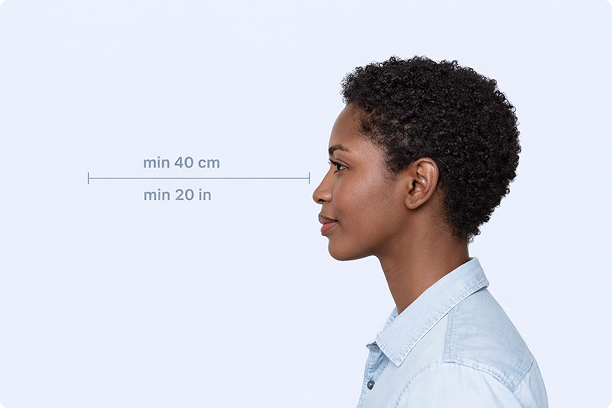
Correct Distance
Hold your camera at arm's length (40cm/20in minimum) for the best results
_1768770085753-BWkNoFUp.jpg)
Face The Camera
Look straight at the camera with a neutral expression and eyes open
Even Lighting
Use natural light or soft indoor lighting to avoid shadows on your face
What You Get
Digital Photo
High-resolution JPEG for online applications
Print-Ready PDF
4x6 inch PDF with multiple copies and cut guides
Acceptance Guarantee
Full refund if your photo is rejected
Why Choose PassportApp?
Ready in 30 Seconds
Fast AI processing delivers your photo instantly.
Money Back Guarantee
Full refund if your application is rejected due to the photo.
Compliance Verified
Each photo is checked against official requirements.