
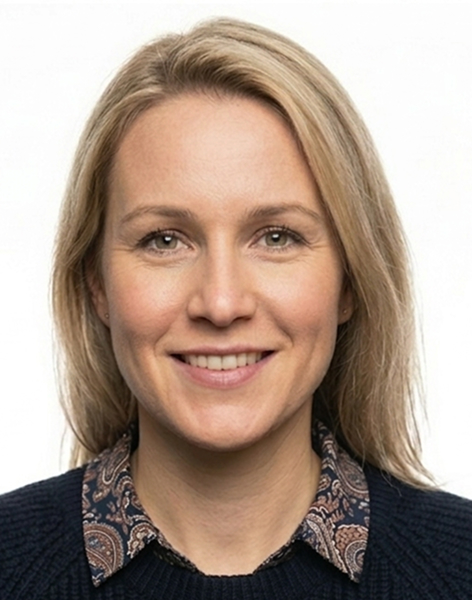
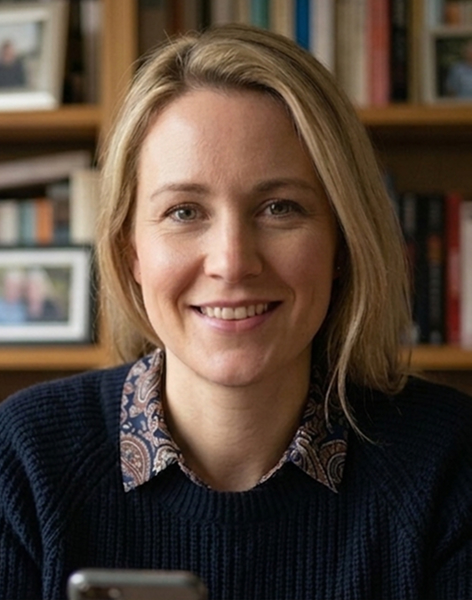
The core dimensions: printed photo
Source: US Department of State, travel.state.gov/content/travel/en/passports/apply/help/photos.html
| Measurement | State Department specification |
|---|---|
| Printed size | 2 x 2 inches exactly (51 x 51 mm). Square format. Any non-square photo is rejected. |
| Head height | 1 to 1-3/8 inches (25–35mm) from chin to crown. 50% to 69% of the 2-inch frame height. |
| Eye position | 1-1/8 to 1-3/8 inches from the bottom of the photo. 56% to 69% of frame height. |
| Head horizontal | Centered horizontally. No tilt. Face looking directly forward. |
| Photo paper | Glossy or matte photo-quality paper. Not plain printer paper, not a laser print on copy paper. |
| Background | White or off-white. Plain, uniform, no shadows, textures, or patterns. |
| Color | Color photographs only. No black and white. |
| Quantity | One photo for paper/mail applications. Two for USCIS forms. Check specific form instructions. |
2×2 inches, correct head size, guaranteed.
Create your compliant US passport photo →Head size: the measurement that causes most invisible rejections
The correct range: 50% to 69%, not 70%
The State Department specifies 1 to 1-3/8 inches from chin to crown. As a percentage of the 2-inch frame: 1 inch is exactly 50%, and 1-3/8 inches (1.375 inches) is 68.75%, which rounds to 69%. Several guides state the upper limit as 70%. This rounds up by one percentage point, but the underlying specification is 1-3/8 inches and the correct stated range is 50% to 69%.
Why 70% appears: 1.375 ÷ 2 = 0.6875 = 68.75%. Some guides round this to 69%, others to 70%. The State Dept specification is 1-3/8 inches (35mm). 50–69% is the correct stated range.
Crown, not top of hair
The measurement runs from the bottom of the chin to the crown — the highest point of the skull. Hair that extends above the crown does not count toward the head height measurement. The State Department is explicit: *"Your hair may extend past the edges of the photo, as long as your entire head is shown and is the appropriate size."*
This matters for people with large natural hair, updos, or voluminous styles. You do not need to flatten your hair. Position the camera so the crown of your head (not the top of your hair) falls within the 1–1-3/8 inch range in the frame.
Eye position: the secondary measurement few guides mention
In addition to overall head height, the State Department specifies where your eyes should fall: 1-1/8 to 1-3/8 inches from the bottom of the photo — 56% to 69% of frame height. A photo can have the correct overall head height but still fail if the eyes are too low (chin cut close to the bottom edge) or too high (excessive forehead space). The eye position measurement cross-checks head height and confirms proper vertical framing.
Camera distance and its effect on head size
The most common invisible cause of incorrect head size: being too close to the camera. The State Department specifies: *"The camera should be several feet (1.2 m) away from you."* A camera held at arm's length (approximately 40–60cm) is too close. At this distance, wide-angle distortion makes the head appear proportionally smaller in the frame, the nose appears disproportionately large, and the resulting head size measurement typically falls below the 1-inch minimum.
At 1.2 metres, the rear camera on most modern smartphones produces a natural, undistorted facial image with the head at approximately the correct proportional size. A second person holding the phone, or a propped phone on a timer, produces better results than a selfie.
[WARNING]Do not stretch or compress your image to fix sizing. The State Department explicitly states: "Do not stretch or compress your image to resize it." A stretched image has the correct 2x2 inch dimensions but incorrect head proportions. Many free online photo tools do this automatically when resizing non-square images.[/WARNING]
Digital specifications for online passport renewal
The digital photo specifications for online renewal are different from the printed photo specifications. Three errors appear regularly on guides covering digital specs.
| Requirement | Online renewal specification |
|---|---|
| Pixel dimensions | Minimum 600 x 600 pixels. Maximum 1200 x 1200 pixels. Must be square (equal width and height). |
| File size | Minimum 54KB. Maximum 10MB. (Not 240KB minimum — that is the DS-160 visa portal maximum.) |
| Accepted formats | JPG, JPEG, PNG, HEIC, HEIF. (Not JPEG only — multiple formats accepted for online passport renewal.) |
| Color space | sRGB. iPhone Display P3 can cause unexpected processing. Set Camera Formats to Most Compatible. |
| Head height | Same 50–69% rule applies. Head must be 1 to 1-3/8 inches within the 2-inch equivalent frame. |
| Content | Same requirements as printed: white/off-white background, neutral expression, no glasses, no editing. |
Three errors to watch for on other guides
Error 1: "JPEG only." For online passport renewal, the State Department accepts JPG, JPEG, PNG, HEIC, and HEIF. JPEG-only is correct for DS-160 visa applications, not passport renewal. The two portals have different format requirements.
Error 2: "Minimum 240KB." The 54KB minimum applies to online passport renewal. 240KB is the *maximum* file size for DS-160 visa applications. These are different portals with different limits. A 240KB minimum would mean most phone photos are too small, which is not the case.
Error 3: "300 DPI required for digital files." DPI is a print measurement, not a digital file measurement. For digital submissions, the State Department specifies pixel dimensions (600x600 minimum), not DPI. A digital JPEG does not have a fixed DPI until it is printed. The 300 DPI figure applies to the print standard, not the upload requirement.
Print vs digital: which route, which specifications
| Route | Photo requirement | Submission note |
|---|---|---|
| Paper application (DS-11, first-time) | One printed 2x2 inch photo on photo-quality paper (glossy or matte). | At an acceptance facility. Do not staple. The agent attaches the photo. |
| Mail-in renewal (DS-82) | One printed 2x2 inch photo on photo-quality paper. | Attach per DS-82 instructions. Lightly write name and date of birth in pencil on back. |
| Online renewal (MyTravelGov) | Digital file: JPG/JPEG/PNG/HEIC/HEIF, 600x600 to 1200x1200 px, 54KB to 10MB. | Upload directly during the online application. No prints needed for online renewal. |
| USCIS forms (I-485, N-400 etc.) | Two printed 2x2 inch photos on photo-quality paper. Same size, stricter recency rule (30 days not 6 months). | Include in small envelope or plastic bag with application package. |
How the US size compares internationally
The US 2x2 inch (51x51mm) format is square. Most other countries use a rectangular format based on the ICAO Document 9303 standard of 35x45mm. A photo taken for a UK, Australian, or European passport cannot be used for a US passport application without reformatting, because the aspect ratios are different.
| Country | Size | Format | Notes |
|---|---|---|---|
| United States | 2 x 2 in (51 x 51 mm) | Square (1:1) | Head 50–69% of height. White/off-white background. |
| United Kingdom | 35 x 45 mm | Portrait (7:9) | Head 29–34mm (64–76%). Cream or light grey background. |
| Canada | 50 x 70 mm | Portrait (5:7) | Head 31–36mm. White or light background. |
| Australia | 35 x 45 mm | Portrait (7:9) | Head 32–36mm from chin to crown. |
| European Union | 35 x 45 mm | Portrait (7:9) | ICAO standard. White or light grey background. |
| India | 51 x 51 mm | Square (1:1) | Same dimensions as US. White background. |
| China | 33 x 48 mm | Portrait | Head 28–33mm. |
| Brazil | 30 x 40 mm | Portrait (3:4) | White background. |
The key practical implication: a UK passport photo (35x45mm, portrait) is not compatible with a US passport application (51x51mm, square). If you need both UK and US passports, you need two separate photo sessions with different crop specifications.
Printing: cheapest options and how to verify size
The 4x6 template method
Format two 2x2 inch passport photos side by side on a 4x6 inch template and print it at a photo service. This is both the cheapest way to get printed passport photos and a useful verification step before submitting.
| Option | 2026 price | Notes |
|---|---|---|
| Walmart Photo | ~$0.16 per 4x6 print | Cheapest. Same-hour pickup at most locations. One 4x6 sheet gives two 2x2 photos. |
| CVS Photo | ~$0.38 per 4x6 print | Same-day pickup. Upload online, collect in store. |
| Walgreens Photo | ~$0.39 per 4x6 print | Same-day pickup. |
| FedEx Office | ~$0.35–$0.49 | Useful for urgent printing outside pharmacy hours. |
| Home printer | ~$0.10–$0.25 | Glossy or matte photo paper only. Not regular printer paper. |
| CVS full service | $16.99 | Full two-photo set. Staff shoot and print. |
| Walgreens full service | $14.99 | Full two-photo set. Staff shoot and print. |
[WARNING]When printing a 4x6 template, always select "actual size" or "print at 100%". Do not allow the print service to scale the image to fill the paper. Scaling changes the passport photo dimensions. Confirm "actual size" before placing the order at any kiosk.[/WARNING]
How to verify head size before printing
For digital verification without printing: open your photo in any image viewer and check the pixel dimensions. If the image is 600 pixels tall (the minimum), the head should occupy 300 to 414 pixels (50–69%). If the image is 1200 pixels tall, the head should be 600 to 828 pixels. Look for a head fill of approximately 55–65% as the ideal working target within the 50–69% acceptable range.
Most common size and dimension failures
| Failure | Cause | Fix |
|---|---|---|
| Head too small | Camera too close causes wide-angle distortion that makes the head appear smaller relative to the frame. Arm's-length selfies are the most common cause. | Camera at 1.2m from face. Use second person or timer with rear camera. |
| Head too large | Camera too far away or applicant filling too much of the frame. | Step back from camera. Standard rear camera without digital zoom at 1.2m. |
| Wrong aspect ratio | Non-square image submitted. A 35x45mm photo has a different aspect ratio and will not match the 2x2 specification. | Verify the image is exactly square before printing or uploading. Width equals height. |
| Stretched image | A non-square photo stretched to fill a 2x2 frame. Dimensions are correct but head proportions are wrong. | Crop to square by removing pixels from one dimension. Never stretch or compress. |
| Eyes out of position | Chin too close to bottom edge (eyes too low) or too much forehead space (eyes too high). | Aim for eyes at approximately 60–65% from the bottom, within the 56–69% acceptable range. |
| Hair counted in head measurement | Photo taken to include the top of the hair, pushing head size over the 1-3/8 inch ceiling. | Measure to the crown. Hair above the crown can extend out of frame. |
| Home printer scaling | Printer applies a margin or scaling that changes output size from the specified 2x2 inches. | Print at 100% actual size, no margins, borderless if available. |
Ready to create your passport photo?
Get a compliant passport photo in minutes. AI-verified. 100% acceptance guarantee or your money back.
Why Choose PassportApp?
Ready in 2 Minutes
AI processing delivers your compliant photo instantly — no booth queues.
Money Back Guarantee
Full refund if your application is rejected due to the photo.
Compliance Verified
Every photo is checked against official requirements before download.
Frequently Asked Questions
Exactly 2 inches by 2 inches (51 x 51 mm). Square format. Within that frame, the head must measure between 1 inch and 1-3/8 inches (25–35mm) from the bottom of the chin to the top of the head (crown, not top of hair). This means the head occupies 50% to 69% of the photo height.
50% to 69% is correct. The State Department specifies 1 to 1-3/8 inches, and 1-3/8 inches divided by 2 inches is 68.75%, which rounds to 69%. Several guides state 70%. This is a rounding overshoot. The correct upper boundary is 1-3/8 inches (35mm), and 69% is the accurate percentage expression.
For online passport renewal, the State Department accepts JPG, JPEG, PNG, HEIC, and HEIF. File size: 54KB minimum to 10MB maximum. Minimum 600x600 pixels, maximum 1200x1200 pixels, square format. Note: DS-160 visa applications use a separate portal that accepts only JPEG with a 240KB maximum. The two portals have different requirements.
No. The State Department measures from chin to crown (top of skull), not the top of the hair. The official guidance states hair may extend past the edges of the photo, as long as the entire head is shown at the appropriate size. Large or voluminous hair that extends above the crown does not count toward head height.
Yes. The State Department explicitly accepts both matte and glossy photo-quality paper. The requirement is photo-quality paper, not specifically glossy. Regular printer paper, plain paper laser prints, and photocopies are not acceptable.
No. DPI is a print measurement. For digital submissions to the online renewal portal, the State Department specifies pixel dimensions (600x600 minimum to 1200x1200 maximum), not DPI. A digital file does not have a fixed DPI until it is printed. The 300 DPI figure is the print standard and does not apply to digital uploads.
No. A UK passport photo is 35x45mm in portrait (rectangular) format. A US passport photo is 51x51mm in square format. The dimensions and aspect ratios are different. A UK photo cannot be reformatted to meet US specifications without re-cropping, which changes the head size and proportions. A separate photo session is required.
54KB for online passport renewal. The 240KB figure that appears on some guides is the maximum for DS-160 visa applications, not the minimum for passport renewal. A standard JPEG from a modern smartphone is typically 3–8MB and comfortably above the 54KB minimum. The 10MB maximum for passport renewal is rarely exceeded by normal phone photos.
This is a common cause of size failure for home-printed photos. Most printers apply default margins or auto-scaling. Print settings: set scale to 100%, actual size, no fit to page. If the printer has a borderless option, use it. Verify the output size by measuring with a ruler before submitting the application.
Related Tools
Related guides
Need help with your passport photo?
Use our free tools to check if your photo meets United States requirements, find photo booths near you, or set up renewal reminders.