
UK Driving Licence Photo (Online Alternative)
Get your UK driving licence photo approved first time. Same requirements as passport photos, processed in minutes.
- Meets all DVLA requirements
- 35mm x 45mm dimensions
- Same specs as passport photos
- Instant digital download
- Print-ready PDF included
⭐ Trusted by customers on Trustpilot | Read reviews
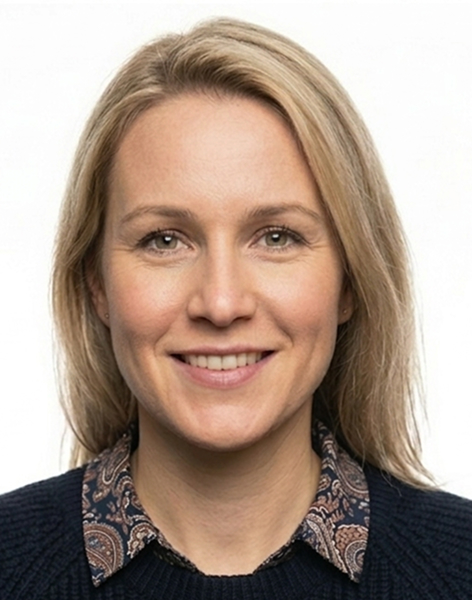
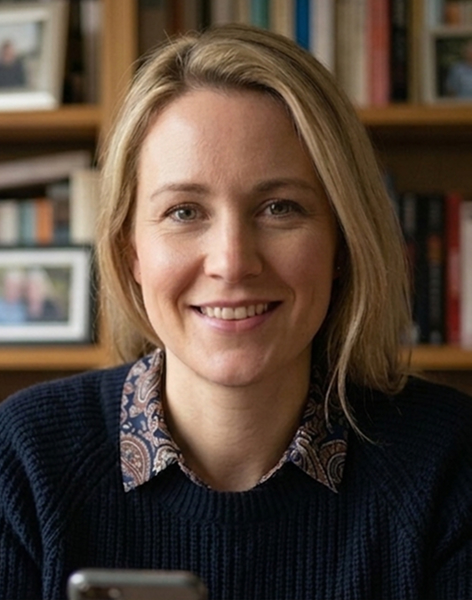
Drag to compare before vs after
Photo Specifications
Will my photo be accepted?
Size
35x45 mm
Lighting
No shadows
Focus
Sharp & clear
Background
Light grey or cream
Head height
29–34 mm
Recency
Last month
Online submission
Printable
How It Works
1. Upload Your Photo
Take a photo with your smartphone or webcam, or upload an existing image.
2. Image Processing
We remove the background, crop to exact specifications, and check against compliance.
3. Download & Print
Get your digital photo instantly, plus a print-ready PDF with cut guides.
UK driving licence photos follow the same specifications as passport photos. Our AI ensures your photo meets all DVLA requirements for provisional and full photocard licences.
DVLA Photo Requirements
Driving licence photos must be 35mm x 45mm with a plain light background. The requirements match passport photos: neutral expression, mouth closed, eyes open and visible, no glasses (unless medically required).
For Provisional and Full Licences
Whether you're applying for your first provisional licence or renewing a photocard, our service creates photos that meet all DVLA specifications. The same photo works for both applications.
UK Driving Licence Photo Requirements: Complete DVLA Guide for Photocard Licences
UK driving licence photos must meet DVLA (Driver and Vehicle Licensing Agency) specifications, which are closely aligned with HMPO standards but have important distinctions that applicants often overlook.
The DVLA photocard serves as both an official driving licence and a secondary form of identification accepted across the UK for age verification. The photo is biometrically scanned when you apply, and again when officials verify your identity during traffic stops or DVLA interactions. This dual-purpose use means specifications are particularly strict.
Size:
Precisely 35mm wide × 45mm tall (0.78:1 aspect ratio). Head dimensions must be 29–34mm tall, occupying 70–80% of the frame. These measurements are absolute — even slight deviations will be rejected.
Background:
Plain white or very pale off-white with absolutely no colour variation, shadows, patterns, or texture. The DVLA's biometric scanning systems use background uniformity to isolate and analyse facial features. Even subtle background variations invisible to the human eye will be detected and cause rejection.
Expression:
Completely neutral expression, mouth closed, eyes open looking directly at the camera. Neutral expression is required because smiling changes facial proportions enough to confuse biometric recognition systems.
Recentness:
Photos must be taken within one month of your DVLA application. The DVLA requires that the photo is a recent, accurate representation of your current appearance.
Countersigning:
Unlike passport photos submitted without countersigning, driving licence application forms must be countersigned by an approved referee. This countersignature goes on the application form (on which the photo is glued), not on the photo itself. Understanding who can sign your application is a frequent source of confusion for new applicants.
The DVLA photocard also functions as a secondary ID document — which is why photo quality standards are enforced as strictly as for passports.
DVLA Driving Licence Photo Specifications: Exact Size, Format, and Technical Requirements
Understanding the exact technical specifications ensures your photos meet requirements on first submission.
Physical photo size:
Exactly 35mm wide × 45mm tall. Not a guideline — an exact measurement. The 0.78:1 aspect ratio is deliberately not square; it's the international standard for official identification documents.
Digital file specifications:
JPEG format (.jpg/.jpeg). Minimum resolution 600×750 pixels at 300 DPI. File size 240KB–1MB. Files below 240KB may lack sufficient detail for DVLA's biometric systems; files above 1MB may fail to upload through the DVLA's system.
Head positioning:
Your head must occupy 70–80% of the frame height (measured chin to crown including hair). Below 70% = insufficient facial detail. Above 80% = insufficient context. This range is verified by digital analysis.
Background colour:
Plain white or very pale off-white — not light grey, not beige, not cream. Professional photograph backdrops designed for official ID photography maintain this uniformity. Home walls typically have colour variations or texture that fail inspection.
Lighting:
Even illumination across both your face and background. Background shadows invisible to the human eye will cause rejection. No harsh shadows on your face, no glare, no uneven illumination.
Colour vs. black and white:
Full colour only. Black and white photos are not permitted. Colour photos allow DVLA's biometric systems to more accurately identify facial features.
No digital editing:
No filters, effects, retouching, brightness adjustments, or any digital manipulation beyond basic resizing. The DVLA's systems detect editing and automatically reject altered photos.
| Specification | Requirement |
|---|---|
| **Size** | 35mm × 45mm (exactly) |
| **Aspect ratio** | 0.78:1 (portrait) |
| **Head height** | 29–34mm (70–80% of frame) |
| **Background** | Plain white or pale off-white |
| **Expression** | Neutral, mouth closed |
| **Eyes** | Open, looking at camera |
| **Glasses** | Not permitted (medical exception only) |
| **File format** | JPEG |
| **Resolution** | Min. 600×750px at 300 DPI |
| **File size** | 240KB–1MB |
| **Editing** | None permitted |
| **Photo age** | Within one month of application |
Who Can Sign Your Driving Licence Photo UK: Countersigner Requirements Explained
A frequently misunderstood aspect of UK driving licence applications is the countersigner requirement. Your driving licence photo itself requires no signature — but your application form (on which the photo is glued) must be countersigned by an approved referee.
Who IS eligible to countersign:
An approved countersigner must be an adult aged 21 or older who has known you personally for at least two years. They must be a UK resident and hold a professional status that demonstrates trustworthiness. Eligible professions include:
- Medical professionals: doctors, dentists, nurses, opticians, pharmacists - Legal professionals: solicitors, barristers, notaries, legal executives - Educational professionals: teachers, lecturers, school heads, university staff - Financial professionals: accountants, bank managers, financial advisors - Government officials: local councillors, civil servants, police officers - Other regulated professionals with formal qualifications
Who is NOT eligible to countersign:
Family members (spouses, parents, siblings, children, cousins) cannot countersign under any circumstances — this is an absolute rule regardless of their profession. Close personal friends typically cannot countersign because the DVLA requires a professional relationship, not a personal friendship. Workplace colleagues without professional qualifications cannot countersign.
Retired professionals CAN countersign if they're willing to declare their former professional position and standing.
Finding a countersigner:
Common practical options include: your GP or optician (most common choice), your bank manager, a teacher from your school days, a solicitor or accountant you've worked with, or local councillors who regularly countersign for constituents. Most eligible professionals are accustomed to countersigning applications and don't view it as a significant commitment.
What happens if your countersignature is invalid:
If the DVLA determines your countersigner wasn't eligible, your application is returned unprocessed. You must find an eligible countersigner and resubmit — delaying your licence by 2–3 weeks. Plan ahead to identify your countersigner before starting your application.
How to Take Your Own Driving Licence Photo at Home: Step-by-Step Guide
Many people successfully take their own driving licence photos at home. Following a systematic process improves your chances of first-submission approval. Allow approximately 110–130 minutes.
Step 1: Prepare your background (20 min) Find a plain white wall or use white poster board. The background must be completely uniform with no texture, pattern, or colour variation. Inspect carefully — subtle variations invisible to the eye are detected by DVLA scanning systems. Stand 1.5–2 metres from the backdrop to prevent body shadows falling on the background.
Step 2: Set up your lighting (20 min) Position lights at 45-degree angles to your face for even illumination across both face and background. Natural window light is often best — position yourself facing a bright window. Avoid overhead ceiling lights (create under-eye shadows) and single-side lighting (creates half-face shadows). Take test photos to verify even lighting.
Step 3: Position your camera (10 min) Mount your camera or smartphone on a tripod at eye level or slightly above. Use the self-timer or remote trigger — never hold the camera yourself as this creates unstable, angled positioning.
Step 4: Dress appropriately (5 min) Wear solid, neutral-coloured clothing — blue, grey, navy, or black work well. Avoid white (blends with background), bright colours, busy patterns, or large logos. Your clothing shouldn't draw attention from your face.
Step 5: Groom and prepare (10 min) Style your hair as you normally wear it but ensure it doesn't cover your forehead or eyes. Hair should be styled away from your face. If you wear prescription glasses, you can wear them (no glare). Keep makeup natural-looking.
Step 6: Position yourself and take photos (25 min) Centre yourself horizontally. Head perfectly straight — not tilted. Eyes open, looking directly at the camera. Neutral expression with mouth closed. Take 5–10 photos in burst mode for multiple options.
Step 7: Review and select (15 min) Look for: uniform white background with no shadows, clear facial visibility, eyes open and forward, head straight, even lighting, neutral expression.
Step 8: Crop, resize, and verify (15 min) Crop to 0.78:1 aspect ratio (35×45mm). Ensure head occupies 70–80% of frame. Resize to at least 600×750px at 300 DPI. Save as JPEG. Use our <a href="/tools/passport-photo-checker">free photo checker</a> to verify against DVLA specs before submitting.
DVLA Driving Licence Photo Approval Rates: Why Photos Get Rejected
Understanding real-world approval rates helps you assess rejection risk and choose the right approach.
DIY home photography: ~65–75% approval rate Approximately 25–35% of DIY driving licence photos are rejected on first submission. The primary rejection reasons are: background issues (colour variation, shadows — 30% of rejections), incorrect sizing or head positioning (20%), poor lighting with harsh shadows (15%), expression issues (10%), photo quality problems (10%), and other technical reasons (5%).
Supermarket photo booths: ~85–90% approval rate Max Spielmann booths and similar kiosks achieve approximately 85–90% approval. The professional backdrop, calibrated lighting, and automated positioning guidance improve results substantially. The remaining 10–15% of rejections typically result from user error rather than equipment issues. Cost: £6.99–£16.95.
Professional photo studios: ~85–95% approval rate Studios with experience in official ID photography achieve 85–95% approval rates. Cost is typically £15–30 per session.
Online AI-verified services: ~99.8% approval rate AI services verify each photo against all official DVLA requirements before submission. The AI analyses sizing, background uniformity, lighting, expression, head positioning, and 40+ technical specifications. Specific feedback is provided for any issues. Unlimited retakes at no additional cost.
| Method | Approval Rate | Cost | Time |
|---|---|---|---|
| DIY at home | 65–75% | £0 | 110–130 min |
| Supermarket booth | 85–90% | £6.99–£16.95 | 10–15 min |
| Photo studio | 85–95% | £15–30 | 15–30 min |
| AI-verified online | 99.8% | £9.99 | 2–5 min |
The dramatic difference between DIY (35% rejection) and AI-verified (0.2% rejection) means you're approximately 175 times less likely to experience rejection with AI verification.
Free vs. Paid Driving Licence Photo Services: What You Actually Get
Many people search for "driving licence photo online free" hoping to avoid costs. Understanding what "free" actually means helps you make an informed decision.
What "free" typically means:
When services advertise free driving licence photos, they usually mean: free checking/verification tools (you take your own photo, they verify it), free templates or guides, or free upload capability. True free photo creation services with compliance verification are extremely rare.
DIY home photos (technically free):
Taking your own photo costs nothing in service fees. However, the real cost includes your time (1.5–2 hours), potential failed attempts, and if rejected, the additional time and cost of retaking and reapplying. Factoring in the 25–35% rejection rate, the expected total cost is higher than it appears.
Supermarket photo booths (£6.99–£16.95):
The most affordable professional option. Digital only from £6.99; prints plus digital for £16.95. Genuinely affordable with 85–90% approval rates — arguably the best value if a booth is accessible to you.
Professional studios (£15–30):
Higher cost offset by superior equipment and expertise. Approval rates 85–95%.
Online AI services (£9.99):
For £9.99 you get: unlimited retakes at no extra cost, specific feedback on any issues, AI verification against DVLA specs, 99.8% approval rate, instant download, and complete control over timing.
True cost when factoring in rejection probability:
| Method | Service Cost | Rejection Rate | Expected Total Cost | |--------|-------------|---------------|-------------------| | DIY | £0 | 25–35% | £17–35 (time + retakes) | | Booth | £16.95 | 10–15% | ~£18.65 | | Online AI | £9.99 | 0.2% | ~£10 |
Online AI services actually offer the lowest expected cost when rejection probability is factored in.
How to Prepare Yourself
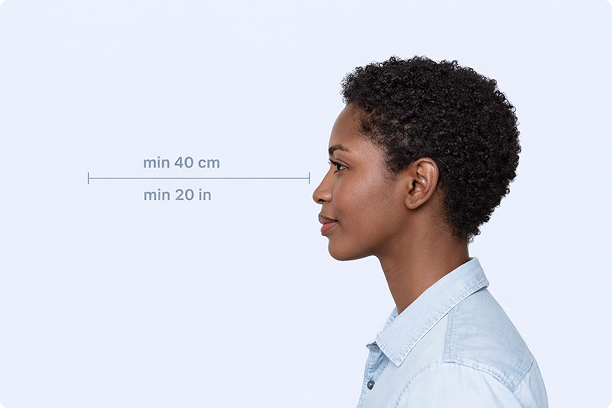
Correct Distance
Hold your camera at arm's length (40cm/20in minimum) for the best results
_1768770085753-BWkNoFUp.jpg)
Face The Camera
Look straight at the camera with a neutral expression and eyes open
Even Lighting
Use natural light or soft indoor lighting to avoid shadows on your face
What You Get
Digital Photo
High-resolution JPEG for online applications
Print-Ready PDF
4x6 inch PDF with multiple copies and cut guides
Acceptance Guarantee
Full refund if your photo is rejected
Why Choose PassportApp?
Ready in 30 Seconds
Fast AI processing delivers your photo instantly.
100% Acceptance Guarantee
Full refund if your application is rejected due to the photo.
Compliance Verified
Each photo is checked against official requirements.