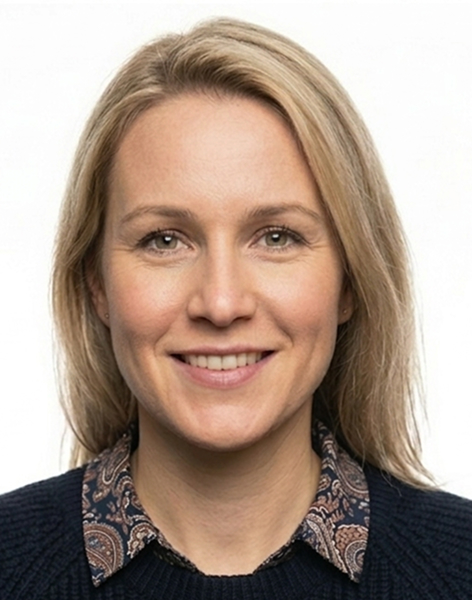
Australian Passport Photo Size — Quick Reference
Size: 35 × 45 millimetres (1.4 × 1.8 inches) Aspect ratio: 0.78:1 (rectangular portrait — NOT square like US photos) Head height: 70–80% of frame (25–32 mm chin to crown) Too small: Head under 70% = REJECTION Too large: Head over 80% = REJECTION Sweet spot: 73–77% of frame = highest approval rate File format: JPEG (.jpg or .jpeg) File size: 240 KB to 1 MB Pixels (300 DPI): 413 × 531 pixels Background: White or off-white, uniform, no shadows
Top rejection reasons in Australia: 1. Background issues (25–30% of rejections) 2. Poor lighting (20–25%) 3. Incorrect head sizing (12–18%) 4. Wrong expression (10–15%)
What Is the Official Australian Passport Photo Size?
The standard Australian passport photo size is 35 mm wide × 45 mm high. This portrait (rectangular) format is mandatory.
This applies to adult, child, and baby passport photos, and applies to both printed and digital submissions.
Australian photos follow the EU/international standard also used across Europe and Asia-Pacific. This is fundamentally different from US photos (2×2 inches square) — the two sizes are incompatible and cannot be substituted.
Head Proportion Requirements (Most Common Failure)
Within the 35 × 45 mm frame, your head must occupy a specific proportion:
Requirement: Head (chin to crown) = 70–80% of image height In millimetres: 25–32 mm
Examples of correct vs incorrect head proportions:
- Head at 75% of frame = PERFECT ✓
- Head at 73% of frame = APPROVED ✓
- Head at 65% of frame = REJECTED ✗ (too small)
- Head at 85% of frame = REJECTED ✗ (too large)
Approximately 12–18% of Australian passport photo rejections are caused by incorrect head proportions. Cropping tools and generic apps frequently get this wrong because they only resize the outer frame without measuring head height.
How to Measure Head Proportions
Before taking the photo: 1. Set up a plain white background 2. Position camera 1.5–2 metres away 3. Imagine a vertical line from your chin to the top of your head 4. This line should occupy 70–80% of the frame height
Visual test:
- 70% of frame = minimum standard ✓
- 75% of frame = optimal ✓
- 80% of frame = maximum allowed ✓
- Below 70% = too small, rejected ✗
- Above 80% = too large, rejected ✗
Measuring a digital photo: 1. Open in any image editor 2. Measure vertical distance chin to top of head (pixels) 3. Divide by total image height — result must be 0.70–0.80
Example: head 390px ÷ total 531px = 73% — PERFECT ✓
Best method: AI verification — PassportApp measures exact head proportions automatically and tells you if your photo is compliant before you submit to ASIC.
Eye Position and Vertical Alignment
Eye placement is one of the most important biometric measurements.
DFAT systems analyse the distance from eyes to the bottom of the photo, vertical symmetry of the eyes, and horizontal alignment of pupils.
If the eyes sit too high or too low within the frame, the photo may be rejected even if the head size appears correct.
This is why photos that look right to the human eye can still fail automated biometric checks.
Digital Size Specifications
For digital submissions, the image must preserve the same biometric proportions as the physical 35 × 45 mm format:
- Recommended resolution: 413 × 531 pixels at 300 DPI
- Minimum acceptable: 206 × 266 pixels at 150 DPI
- Aspect ratio: 0.78:1 (must match 35×45mm — not square)
- File format: JPEG (.jpg or .jpeg)
- File size: 240 KB to 1 MB
- Color depth: 24-bit RGB
Applicants often resize images in pixels without preserving correct proportions, which breaks biometric alignment. Always use aspect-ratio-locked tools or AI services to ensure the 0.78:1 ratio is maintained.
Top 10 Australian Passport Photo Sizing Mistakes
Approximately 12–18% of Australian passport photo rejections are due to sizing. The most common mistakes:
1. Wrong aspect ratio — Using square format (like US 2×2 inches) instead of rectangular 35×45mm. Fix: ensure photo is 0.78:1 (taller than wide).
2. Head too large (over 80%) — Standing too close to camera. Fix: step back to 1.5–2 metres so head fills 70–80% of frame.
3. Head too small (under 70%) — Standing too far away. Fix: move closer until head fills 70–80% of frame.
4. Background not uniform — Shadow, pattern, or object visible. Fix: use plain white poster board. This is the #1 overall rejection reason (25–30% of failures).
5. Cropping loses aspect ratio — Manual cropping changes the 35×45mm ratio. Fix: use AI tool that maintains exact ratio.
6. Head tilted — Not perfectly vertical. Fix: face camera straight on, head perfectly vertical.
7. Resizing distortion — Stretching or squashing when resizing. Fix: maintain 0.78:1 aspect ratio lock when resizing.
8. Wrong DPI — Saving at too low resolution (72 DPI). Fix: 300 DPI recommended; 150 DPI minimum acceptable.
9. File too large or small — Outside 240 KB–1 MB range. Fix: check file size before submitting.
10. Saving JPEG multiple times — Each re-save degrades quality. Fix: export only once at final size.
Size Accuracy: DIY vs Photo Booth vs Online Service
| Method | Size Accuracy | Cost | Time | If Rejected | |--------|--------------|------|------|-------------| | DIY at home | ~30% | A$10–25 (materials) | 1–2 hours | Must retake and try again | | Photo booth (Australia Post, library) | ~70% | A$10–15 | 30 minutes | Must find booth again, pay again | | Online AI service (PassportApp) | 99.8% | From A$17.99 | 2 minutes | Full refund |
DIY at home: High risk of wrong 35×45mm ratio or incorrect head proportions. Smartphone cameras often distort aspect ratios, and manual cropping frequently loses the 0.78:1 ratio. Success rate around 30–35%.
Photo booths (Australia Post): Preset dimensions help with the 35×45mm format, but lighting and expression issues cause many failures. Sizing accuracy is around 70–75%.
Online AI service: AI measures exact 35×45mm dimensions and automatically verifies 70–80% head proportions before download. Unlimited retakes at no extra cost. 99.8% size accuracy.
The key insight: online services cost the same as a photo booth but deliver far higher accuracy — because sizing is verified by software before you submit to ASIC.
Why Smartphone Photos Often Break Size Compliance
Smartphones introduce subtle size problems because wide-angle lenses distort proportions, portrait modes crop dynamically, and screenshots change pixel ratios.
These effects are often invisible to users but detected during biometric analysis.
The safest approach is to take the photo in standard camera mode (not portrait mode), at 1.5–2 metres from the camera, then verify the proportions using an AI compliance checker before printing or submitting.
Size Rules for Babies and Children
Baby and child passport photos still follow the same 35 × 45 mm frame.
However:
- Head size allowances are slightly more flexible
- Facial expression rules are relaxed
Despite this, incorrect framing and background issues remain common causes of rejection for children's photos.
How to Guarantee Correct Australian Passport Photo Size
The safest way to confirm compliance is to validate your photo before submission.
Our Australian passport photo checker confirms outer dimensions (35×45mm), measures head proportions (70–80%), validates eye placement, and flags invisible size errors.
Safest workflow: 1. Take a neutral photo at home against a white background 2. Upload to an AI compliance tool 3. Auto-crop to 35×45mm with correct head proportions 4. Download the verified image 5. Print or submit digitally
Ready to create your passport photo?
Get a compliant passport photo in minutes. AI-verified. 100% acceptance guarantee or your money back.
Why Choose PassportApp?
Ready in 2 Minutes
AI processing delivers your compliant photo instantly — no booth queues.
Money Back Guarantee
Full refund if your application is rejected due to the photo.
Compliance Verified
Every photo is checked against official requirements before download.
Frequently Asked Questions
The exact size for an Australian passport photo is 35×45 millimetres (1.4×1.8 inches). The aspect ratio must be 0.78:1 (rectangular portrait, not square). The head must occupy 70–80% of the frame (25–32mm in height). The photo must be in colour, on a white or off-white background, with your full face clearly visible. For digital submission: 413×531 pixels at 300 DPI, JPEG format, 240 KB to 1 MB.
The head should occupy 70–80% of the image height in a 35×45mm photo. This means the head (from chin to crown) should measure approximately 25–32mm in height. Less than 70% = head too small (rejection). More than 80% = head too large (rejection). The 70–80% range is strictly enforced by DFAT facial recognition systems.
For digital Australian passport photos, the pixel dimensions must be approximately 413×531 pixels at 300 DPI (matching the 35×45mm physical size). The aspect ratio is 0.78:1 (taller than wide — not square). Minimum acceptable is 206×266 pixels at 150 DPI. File must be JPEG format, 240 KB to 1 MB.
Australian passport photos are rejected for sizing when: head too small (under 70% of frame), head too large (over 80% of frame), wrong aspect ratio (using square instead of 35×45mm rectangle), uneven margins, or image distorted when resized. Approximately 12–18% of rejections are sizing-related. However, background issues (25–30%) and lighting (20–25%) are the most common overall rejection reasons.
Australian passport photos are 35×45mm (rectangular, 0.78:1 ratio), while US passport photos are 2×2 inches (square, 1:1 ratio). These are incompatible standards — you cannot use US-sized photos for Australian passports. The 35×45mm size is the EU/international standard used across Europe and Asia-Pacific.
No. DFAT (Australian Passport Office) requires a completely neutral expression with mouth closed. Smiling is not permitted and will cause rejection. Eyes must be open and looking directly at the camera. A neutral expression is required for facial recognition and biometric verification at border control.
The background must be white or off-white (very pale, neutral tone), completely uniform with no shadows, patterns, or objects. Background quality is the #1 rejection reason for Australian passport photos, accounting for 25–30% of all rejections. High contrast between face and background is essential for ASIC's automated scanning.
Your Australian passport photo must be taken within the last 6 months. Photos older than 6 months will be rejected by DFAT. The 6-month requirement ensures the photo accurately represents your current appearance for facial recognition and identity verification.
If DFAT rejects your passport photo for sizing, you must retake and resubmit it, delaying your application by several weeks. Using AI compliance verification before official submission prevents rejection by checking exact 35×45mm dimensions and 70–80% head proportions before you submit.
Use an AI compliance checker before submitting to DFAT. PassportApp verifies photo size (35×45mm), head proportions (70–80%), background, lighting, and expression against official DFAT requirements. You can retake as many times as needed until your photo passes verification, then submit with confidence.
Related Tools
Official Resources
Need help with your passport photo?
Use our free tools to check if your photo meets Australia requirements, find photo booths near you, or set up renewal reminders.